
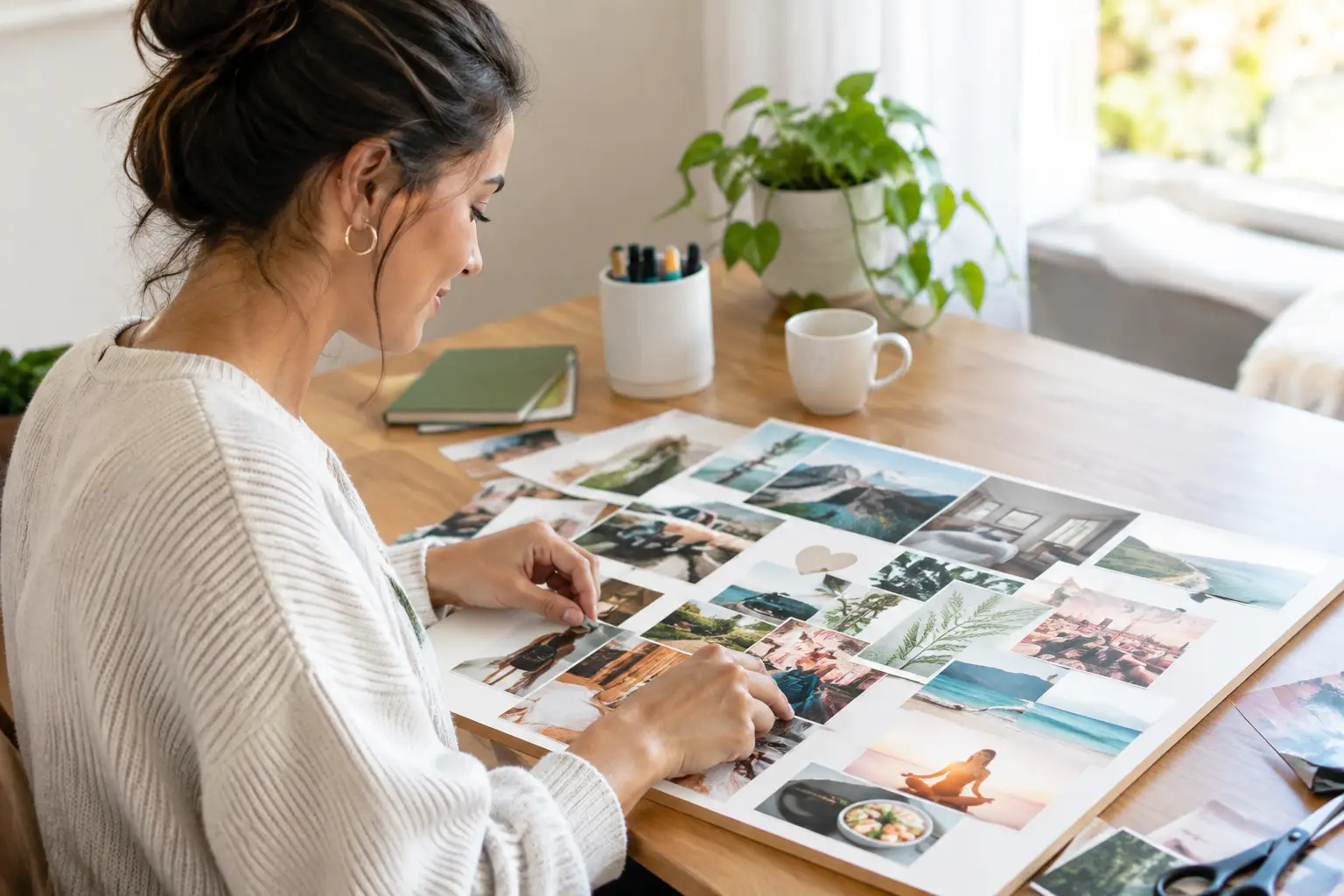
How to Create a Vision Board That Feels Like You
If “how to create vision board” is the phrase you typed into a late-night search, you may be carrying more than a few goals. Maybe you are craving a fresh start, a home that feels more like you, work that respects your energy, or simply a little more joy in your ordinary Tuesday. A vision board can give those quiet hopes somewhere to land.
This is not about making a perfect collage or proving that you want something badly enough. It is a creative pause: a chance to notice what matters, picture the life you are moving toward, and choose a few small ways to meet it. You have weathered a few storms. You do not need to have every answer before you let yourself dream boldly.
How to Create a Vision Board With Intention
A vision board is a collection of images, words, colors, and symbols that represent the life you want to experience. It can support manifestation, but not as a rigid promise that a beautiful picture will do all the work. Think of it as a visual reminder of your direction. It helps you return to what you value, especially when daily life gets loud.
The best board is not necessarily the most polished one. It is the one that makes you feel something true when you look at it: possibility, steadiness, relief, excitement, or a sense of coming home to yourself.
1. Begin with permission, not pressure
Before collecting images, give yourself a few quiet minutes with a notebook. Instead of asking, “What should I want?” try asking, “What would feel nourishing, freeing, or meaningful in the next season of my life?”
You might be focused on a new chapter after a divorce, a move, burnout, grief, career change, or the realization that you have spent a long time taking care of everyone else. Your vision does not need to look impressive to anyone else. It only needs to be honest.
Write freely for five or ten minutes. Let practical desires sit beside the tender ones. A savings goal belongs next to a photo of a sunlit kitchen. Better sleep belongs next to an image of friends laughing at a table. We are whole people, and our hopes rarely fit into one neat category.
2. Choose a timeline that feels kind
Some people love making a board for the year ahead. Others find that a twelve-month plan feels too tight, especially in a season with many unknowns. You might create a vision for the next three months, a particular birthday year, or a broader chapter called “my next right life.”
There is no prize for choosing the most ambitious timeline. A shorter window can make a goal feel more reachable, while a flexible timeline can leave room for life to unfold. The point is not to control every detail. It is to create a gentle, visible relationship with where you want to go.
3. Look at the whole shape of your life
When we feel stuck, it is easy to put all our attention on one problem: money, relationships, work, or our body. Those things matter. But a vision board becomes more supportive when it reflects the full shape of a life you want to live.
Consider these six areas as you gather ideas: health and wellness; money and career; relationships; travel and adventure; home and everyday life; and mindset and joy. You do not have to fill every category. In fact, a board with only two or three meaningful themes may feel more spacious and useful than one crowded with goals.
For each area that calls to you, imagine one ordinary moment six months from now. What are you doing? Who is nearby? What do you notice in your body? Perhaps financial confidence looks like opening your banking app without dread. Perhaps wellness looks like taking a morning walk with enough energy to enjoy it. Perhaps adventure is finally saying yes to a weekend road trip.
Those small scenes often reveal more than a vague goal ever could.
4. Gather images that create a feeling
You can use magazines, printed photographs, old cards, stickers, fabric scraps, postcards, or words you write by hand. A digital board can work beautifully too, particularly if you want it as your phone or computer background. The format matters less than whether you will actually see and enjoy it.
As you choose images, pay attention to your first response. Do you feel expanded, grounded, curious, or energized? Keep it. Do you feel behind, inadequate, or as though you are borrowing someone else’s dream? Set it aside.
Not every image needs to be literal. A picture of an open window might represent emotional breathing room. A pair of hiking boots might stand for courage rather than an actual hiking goal. A bowl of bright fruit may remind you to care for yourself with more tenderness. Let symbolism do some of the work.
If searching for images feels overwhelming, a printed vision board book can offer a welcoming place to begin. Wild Free Awake vision board books organize cutouts and prompts around the life areas many of us are already trying to hold, so you can spend less time hunting and more time listening to yourself.
5. Add words that feel believable
Affirmations can be powerful when they feel supportive rather than forced. If “I am completely confident” makes you roll your eyes, do not make yourself use it. Try language that meets you where you are: “I am learning to trust myself,” “I make room for joy,” or “Small choices are building my future.”
Include words that name how you want to feel, not only what you want to achieve. You may want to feel rested, capable, playful, secure, connected, creative, or free. These words can guide decisions when there is no obvious right answer.
A vision board is also allowed to hold a few clear goals. You might add a number for a savings target, the name of a city you hope to visit, or a phrase such as “submit the application.” Just balance outcomes with the emotional experience you want along the way. Your life is not a checklist waiting to be completed.
Create Your Vision Board, Then Make It Visible
Arrange your materials in a way that feels pleasing, but do not wait for the perfect layout. Start with the images that matter most and build around them. You can organize by life area, create a loose color story, or place a central word in the middle. You can also leave blank space. A little room to breathe is not wasted space.
Once everything is in place, look at the board from a small distance. Ask yourself: Does this reflect my desires, or my fears about what I should fix? Is there one image that no longer feels true? Is there one hope I have been afraid to claim? Adjust gently.
Then put your board somewhere you will naturally encounter it. A bedroom wall, closet door, journal cover, desk area, or the background of a digital device can all work. Visibility matters because repetition helps your brain notice relevant choices and opportunities. Still, seeing it daily is not a command to hustle. Some days you may glance at it and do nothing more. That counts as staying connected.
Turn one image into one real step
A vision board becomes most useful when it is paired with small follow-through. Choose one image or phrase and ask, “What is one action this could invite this week?” Keep the action modest enough that it respects your real life.
If your board includes a peaceful home, spend fifteen minutes clearing the corner that bothers you most. If it includes career growth, update one line of your resume or send one thoughtful email. If it includes stronger relationships, text the friend you miss and suggest a simple coffee date. If it includes better health, place your water bottle where you will see it in the morning.
This is where intention becomes self-trust. You are not trying to earn the future shown on your board. You are showing yourself that your desires deserve care.
Revisit without judging yourself
Return to your board every few weeks or once a month. Notice what still lights you up, what has changed, and what may need more support. Sometimes a goal falls away because it was never truly yours. Sometimes it remains, but the path toward it looks different than you imagined. Both are useful information.
You may also notice that something you placed on the board has quietly become part of your life. Let yourself celebrate that, even if it seems small. A new bedtime routine, a saved $100, a brave conversation, a solo afternoon doing something you love – these are not minor things. They are evidence that your life can shift through steady, compassionate choices.
Your vision board does not need to predict your future. Let it remind you that there is so much more life to live, and that you are allowed to create it one honest, beautiful step at a time.